How to trade meme coins like a top-tier Solana scalper without blowing up your account
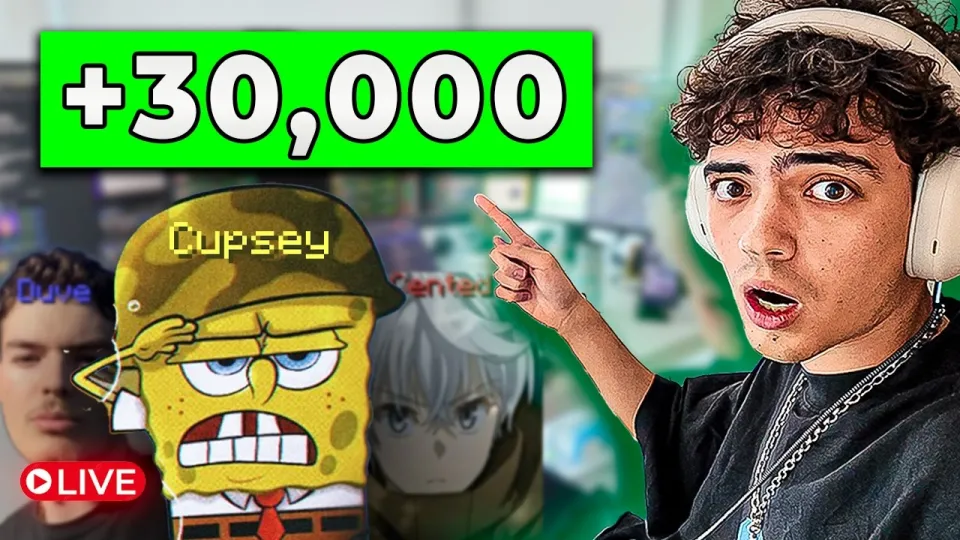
Video: I Traded With The World’s #1 Memecoin Trader
Want articles like this for your own video to promote it on YouTube and Google? Order them through the Telegram bot @sat_sit_bot. Articles with your video embedded are written and posted by the bot itself — on popular topical sites (no ads). Free trial — 50 articles.
· based on the channel Ethan Prosper
Meme coin trading is the practice of buying and selling tokens with no cash flow, no product and no fundamental valuation, where price is driven almost entirely by attention, liquidity and speed. Done the way the top Solana scalpers do it, it means sitting in front of a trading terminal for ten or more hours a day, buying brand-new pairs within seconds of launch and exiting into the first wave of buyers. If you want to try it, start on a terminal built for it — registration and access via Padre — and treat every position as money you can lose in full.
The reference point for this article is an Ethan Prosper session with Cupsey, a trader presented as the world's number one memecoin trader, in which a single sitting produced well over 300 SOL of realised profit across a handful of trades. What follows is not a recap of that video but a working framework: how the edge actually works, what the numbers mean, and how a normal trader can approach meme coins without copying the worst parts of the speed-trading lifestyle.
What a top memecoin session actually looks like
A professional memecoin session is a sequence of small, fast, high-conviction bets on tokens that are minutes old, not a portfolio of long-term holdings. In the Ethan Prosper video the guest opens with early positions in two fresh Solana launches, Lobo and a token called 1%, and those two trades alone are credited with roughly +200 SOL. Later trades include a cheese-themed coin, an AI-cooking token, a Mosaic AI coin worth about +80 SOL, and an Elon/Grok-themed launch that produced around $15K. The whole run fits inside a single recording, which tells you the holding periods are measured in minutes, not days.
That structure matters more than any individual ticker. The edge is not secret information about which coin will win; it is the ability to be early, size correctly, and sell into demand that arrives after you. The trades are also public — the host's wallet is sAdNbe1cKNMDqDsa4npB3TfL62T14uAo2MsUQfLvzLT and the guest's is 2fg5QD1eD7rzNNCsvnhmXFm5hqNgwTTG8p7kQ6f3rx6f — which is useful for study and useless as a copy-trading shortcut, because by the time a wallet movement is visible the entry price is gone.
The mechanics of a meme coin trade on Solana
Every meme coin trade on Solana comes down to four mechanical steps, and getting any one of them wrong erases the edge. The chain is fast and cheap, which is exactly why execution discipline separates profit from loss.
- Find the pair early. New launches appear on venues such as Pump.fun and migrate to decentralised exchanges; terminals aggregate these feeds so you see a token before it trends on social media.
- Check the contract and the holder map. Look for a mint authority that is revoked, a freeze authority that is disabled, and a top-10 holder concentration that leaves room for real distribution. A dev holding a large share is an exit liquidity problem waiting to happen.
- Size the position against liquidity, not against your feelings. If your buy moves the price several percent, your exit will move it further against you. Thin pools punish size.
- Set the exit before the entry. Decide the market cap or the multiple at which you sell part, and accept that you will sometimes sell too early. Selling into strength is the whole business model.
On top of that sits the tooling layer: a trading terminal with hotkeys, priority fees, slippage control and a wallet that is separate from anything you care about. A burner wallet funded with a fixed amount per session is the difference between a bad day and a catastrophe.
Why the numbers in these videos are not a benchmark
Reported profits in memecoin content are gross, selected and survivorship-biased, and treating them as a target is the fastest way to lose money. A session showing +350 SOL does not show the failed launches, the rugs avoided by a second, the fees, or the dozens of attempts that went nowhere. It also does not show the bankroll required to take those positions at those sizes without moving the price.
There is a second, less comfortable point that viewers raise constantly: large traders often operate multiple wallets, and the same attention that lifts a token can be used to distribute into retail buyers. You do not have to assume malice to protect yourself — you only have to assume that you are the slowest participant in the room. Assume the person on the other side of your buy has better information, faster infrastructure and a lower cost basis.
That is why the honest framing of a video like this is inspiration, not instruction. The trader's skill is real, but it was built over thousands of hours of screen time and losses that never made the edit.
A realistic risk framework for anyone who is not a full-time scalper
The sustainable way to approach meme coins is to cap the damage before you start, because the distribution of outcomes is dominated by total losses. Decide in advance what percentage of your crypto portfolio can go to this category — for most people a small single-digit percentage — and never refill a blown session budget on the same day.
Practical rules that survive contact with the market:
- Use a dedicated wallet funded per session, so a compromised link or a malicious approval cannot reach your main holdings.
- Cap position size at a fraction of pool liquidity, typically well under one percent, so your own exit does not become the crash.
- Take partial profits on the way up. A token that doubles is not a token that will ten-x; banking half removes the temptation to round-trip.
- Avoid leverage and borrowed money entirely. Meme coins already carry volatility that makes liquidation mechanics irrelevant — the token itself can go to zero first.
- Log every trade with entry, exit, thesis and outcome. Without a log you cannot tell skill from a good week.
Consider also the alternative the market offers: trading larger, more liquid coins with slower setups. The returns are smaller in percentage terms and far less likely to be negative one hundred percent.
Common questions and doubts from viewers
Viewers of this kind of content tend to ask the same few things, and the answers are less exciting than the trades. The most frequent is what "faucets" means in a trading context — in these streams it usually refers to small, repeatable sources of income or free capital (airdrops, incentives, referral rewards) that fund the riskier trades, rather than a single big score.
The second is whether copying a profitable wallet works. It does not, at least not profitably at retail speed: by the time a transaction confirms and you react, the price has moved, and copy-trading bots on Solana compete in the same blocks as the trader you are copying. The third is how much capital is needed. There is no minimum, but there is a practical floor — fees, priority tips and slippage eat a fixed share of every trade, so very small accounts are structurally disadvantaged. The fourth is time: the traders in these videos are working ten-hour days at a screen, and the results shown are the output of that schedule, not of a hobby.
Useful links
- Trading terminal used in the session: https://trade.padre.gg/rk/prosper
- Host's site and links: https://ethanprosper.com
- Guest trader on X: https://x.com/cupseyy
- Free Discord community: https://discord.gg/solmafia
- Paid research community: https://www.joinpastel.com/r/ref=ETHAN
Bottom line
Meme coin trading rewards speed, discipline and the willingness to sell, and it punishes size, hope and borrowed money. The session documented by Ethan Prosper with Cupsey shows what the top end of that skill curve looks like — hundreds of SOL in a day across a handful of Solana launches — but it also shows how narrow the window is: minutes-old pairs, public wallets, and exits timed to the second. Treat it as a demonstration of a craft, not a business plan, and if you want to test the mechanics yourself, do it with a small burner wallet through Padre and a hard loss limit for the session. The channel is worth following for the process, provided you watch the risk as closely as the profit.
Key takeaways
- Top memecoin traders run 10+ hour sessions on new Solana pairs, a style the source video calls the most difficult in crypto.
- The featured trader, Cupsey, turned a session into roughly 350+ SOL across a handful of trades, including about +200 SOL on early Lobo and 1% plays.
- Single trades in the video produced +80 SOL on a Mosaic AI coin and about $15K on an Elon/Grok-themed token.
- Wallets are public: the host's is sAdNbe1cKNMDqDsa4npB3TfL62T14uAo2MsUQfLvzLT and the guest's is 2fg5QD1eD7rzNNCsvnhmXFm5hqNgwTTG8p7kQ6f3rx6f.
- Most viewers do not need this style: larger caps and slower setups carry far less execution risk.
Source: I Traded With The World’s #1 Memecoin Trader · Markdown version
Questions & answers
How much money do you need to start trading meme coins?
There is no formal minimum, but fixed costs make very small accounts inefficient: network fees, priority tips and slippage take a similar bite out of a $50 trade as a $5,000 one. A practical approach is to fund a burner wallet with an amount you are fully prepared to lose, and to size each position so that a total loss does not change your finances.
Can you make money copy trading top memecoin wallets?
Rarely at retail speed. Public wallets show trades after they confirm, and by then the price has usually moved; professional copy-trading bots on Solana compete in the same blocks as the trader being copied. Copying is better used as a study tool to see how good traders size and exit than as an income strategy.
What does 'faucets' mean in memecoin trading streams?
In this context it usually means small, repeatable sources of capital or income — airdrops, incentive programmes, referral rewards — that fund riskier trades. The idea is to build a base of low-risk gains so that speculative positions are played with money that is not essential.
Is speed trading new Solana pairs worth it for beginners?
Almost never as a first step. It is the most difficult style in crypto: ten-hour sessions, seconds-long decision windows and frequent total losses. Beginners are better served by larger, more liquid coins and slower setups, then gradually moving toward smaller caps once they have a track record and a written risk plan.